
BOYCOTT THE OLIGARCHS
Hit Them Where It Hurts

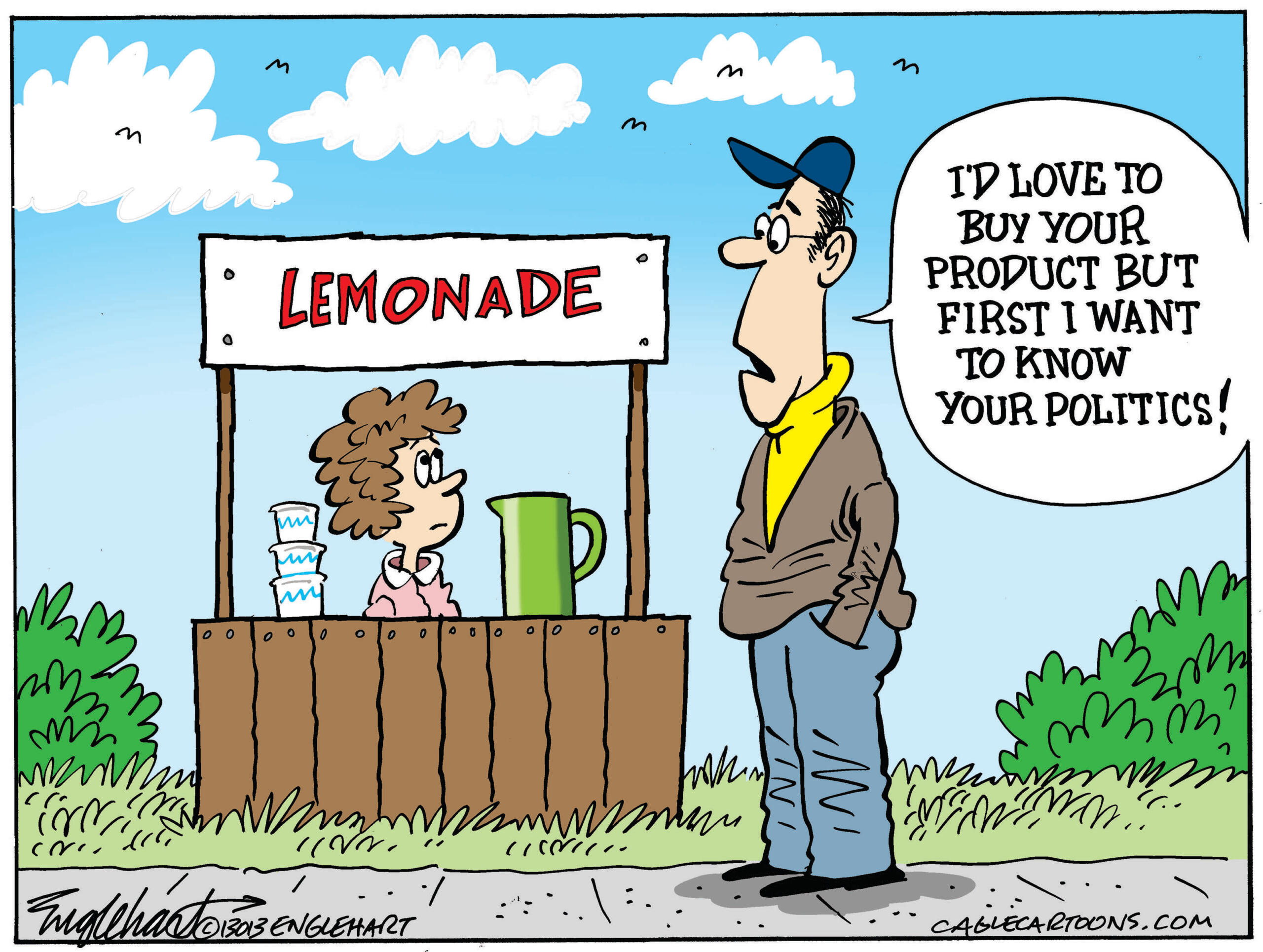
Moments after I posted my question last Friday on whether senators and representatives were hearing any pushback to the Trump/Musk fiasco, the answers began flooding my inbox. It looks like those who held town hall meetings got an earful of complaints about what Trump—and especially Musk—are doing. Some did not even hold a town hall, realizing from the flood of phone calls and texts they are getting that their constituents are not happy. Even voters in some of the most heavily Republican districts are upset with the actions those two are taking to destroy the federal bureaucracy and cancel the benefits that we all rely on from our government.
Apparently, the message is beginning to reach even the low-information voters that they are about to lose their Medicaid and SNAP benefits, that the Department of Veteran’s Affairs is being cut back, and that the administration is not doing anything to lower the cost of food and housing. At the other end of the economic scale, investors are finally getting anxious. The Wall Street Journal editorial board continues to raise questions about the new administration, and the stock market averages have begun to slide. It is becoming increasingly clear that interest rates will be staying high, unemployment rates will be rising, and consumer confidence is plummeting.
This is not what more than three-quarters of the voters wanted or expected. The primary issues that drove the last election were consumer costs, border security, and jobs. The size and efficiency of the government bureaucracy were not even on the agenda. Except of course, as clearly outlined in the Project 2025 report, which too few voters took seriously, if they were even aware of its existence. But here we are. Project 2025 has become the playbook of the Republican party, and its implementation has been both rapid and dramatic. And while there is little that elected Democrats can do at this point, there is much that each of us can do individually.
In addition to the phone calls, text messages, and letters that are flooding the offices of Republican senators and representatives, we can join local demonstrations and talk about our concerns with relatives, friends, and neighbors. All but the most ardent MAGA faithful are now getting nervous and are more open to discussions. The easiest and possibly most productive thing we can all do immediately is boycott businesses that support the administration or are run by billionaires who have piled onto the Trump bus. At the top of the list are Amazon, Tesla, The Washington Post, Chick Fil-A, Hobby Lobby, ExxonMobil, Uber, AT&T, Nestle, and Airbnb. You can find many more listed online.
Start today by joining the nationwide DEI boycott of Amazon, Target, Best Buy, and other large retailers. Then reinforce that effort March 7-14 with a week-long Amazon boycott, and a similar boycott of Nestle the week of March 21-28. There will be a boycott of Walmart the week of April 7-14, another general boycott of all large retailers April 18, and a boycott of General Mills the week of April 21-28.
Cancel your subscription to The Washington Post. More than 250,000 of us did that when Jeff Bezos did not endorse Kamala Harris, severely crippling the paper. If you own a Tesla, sell it or burn it. Their vehicles tend to self-immolate, so your insurance company might not question how it happened. Tesla has thousands of unsold cars on lots and its stock value is tanking. Do as much of your necessary shopping as you can with locally owned small businesses, even if it costs more. Consider that extra cost to be an investment in democracy.
The resistance to the Trump/Musk fiasco is strong and growing fast. It’s hard to imagine that their outrageously illegal and unconstitutional destruction of our federal bureaucracy can succeed but it is essential that each one of us do what we can to stop it. If enough of us participate in these boycotts, the wealthy owners will feel it. Our fight is happening on two fronts, in the legal arena and the economic arena. One will eventually be won or lost in the Supreme Court, where we have little or no impact. The other will be won or lost in the marketplace where consumers do have influence. And by shifting our buying to locally owned businesses whenever possible, we will be boosting our local economies and helping soften the negative effects that Musk is inflicting on the national economy.
(Thanks to Columbian.com for use of their cartoon.)